
Our Sugar Production Process
A vertically integrated 14-step production process from Thai cane cultivation to container loading at Laem Chabang Port. Quality verified at every stage.
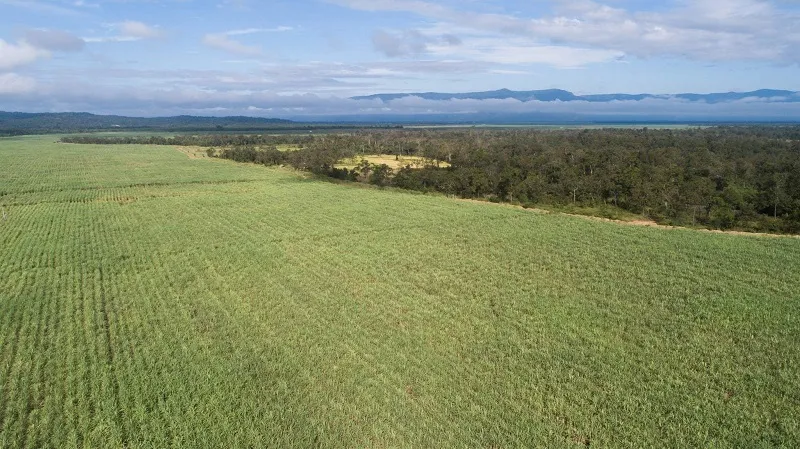
Thai Sugarcane Cultivation
Our journey begins in the fertile plains of Thailand's premier sugarcane-growing regions — Nakhon Ratchasima, Udon Thani, Kanchanaburi, and Suphan Buri. Working with over 8,000 partner farmers, we ensure optimal planting practices, variety selection, and crop management. Thailand's tropical climate, rich soil, and abundant water supply create ideal conditions for producing high-sucrose sugarcane.
Quality Control
Agronomists monitor crop health through regular field inspections. Soil testing and nutrient management programs ensure consistent cane quality. Only approved sugarcane varieties with high sugar content are cultivated.
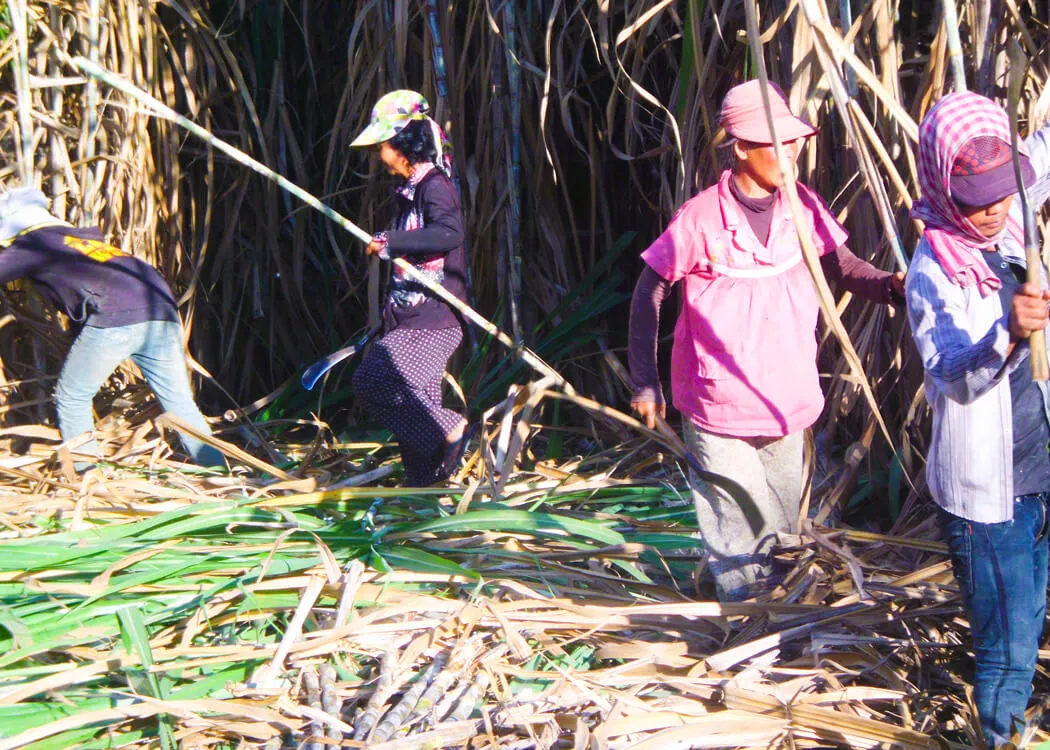
Harvesting
Sugarcane is harvested during Thailand's dry season (November to April) when sucrose content peaks. Both mechanical harvesters and manual cutting are employed depending on terrain and farm scale. Harvested cane is transported to our mills within 24 hours to prevent sucrose degradation, ensuring maximum sugar recovery.
Quality Control
Harvest timing is optimized using Brix refractometer readings to ensure peak sucrose levels. Rapid transport protocols minimize post-harvest losses. Each delivery is weighed and sampled at the mill gate.
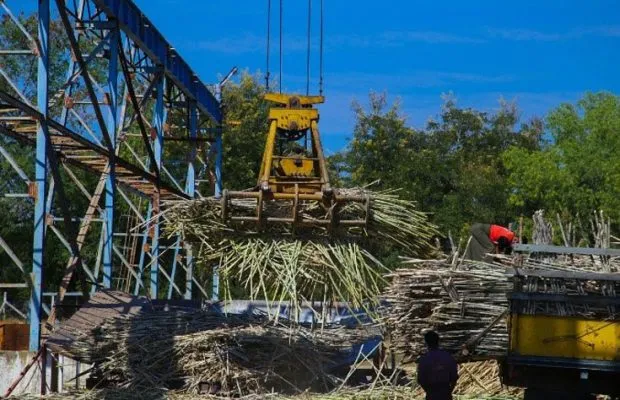
Crushing at Sugar Mills
At our modern Thai sugar mills, sugarcane passes through a series of heavy-duty roller mills that crush the stalks to extract the sugar-rich juice. Our mills use advanced tandem roller configurations that achieve extraction rates exceeding 95%, maximizing sugar recovery from every ton of cane delivered.
Quality Control
Mill rollers are calibrated daily for optimal pressure and extraction efficiency. The fibrous residue (bagasse) is collected for use as renewable fuel in our co-generation power plants.
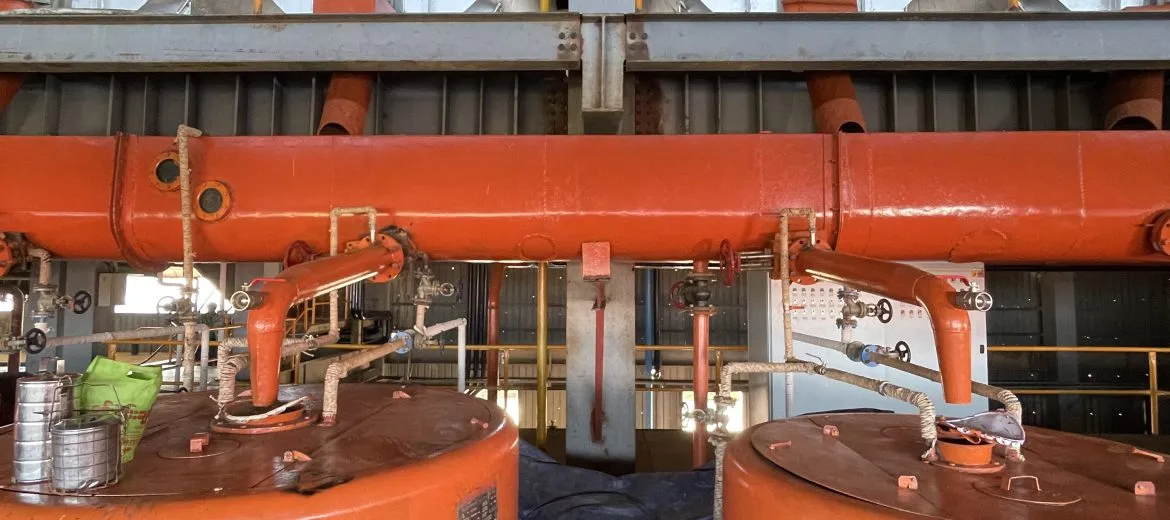
Juice Extraction
The extracted juice undergoes initial screening to remove fiber and plant matter. Hot water is applied during the milling process (imbibition) to maximize sucrose extraction from the crushed cane. The resulting raw juice is collected in tanks for immediate processing.
Quality Control
Juice Brix and purity are measured continuously using inline sensors. Screens and filters remove physical impurities. Temperature and flow rates are precisely controlled.
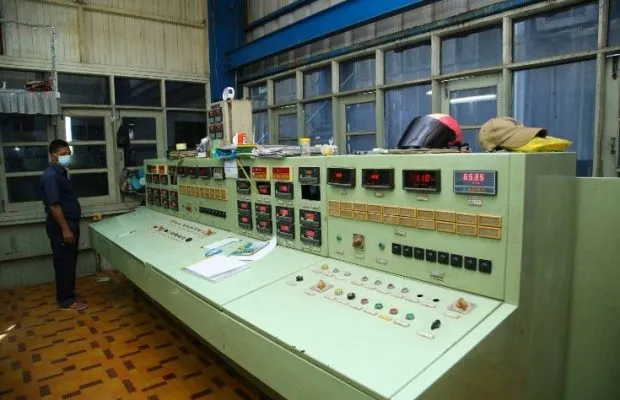
Clarification
Raw cane juice contains impurities that must be removed. Through a carefully controlled clarification process, lime (calcium hydroxide) is added to neutralize acids and precipitate impurities. The juice is heated and settled in large clarifiers where mud and sediment sink to the bottom, leaving clear, golden juice ready for concentration.
Quality Control
pH levels are precisely monitored and adjusted. Clarifier performance is checked hourly. The clear juice undergoes turbidity testing before proceeding. Separated mud is filtered to recover residual sugar.
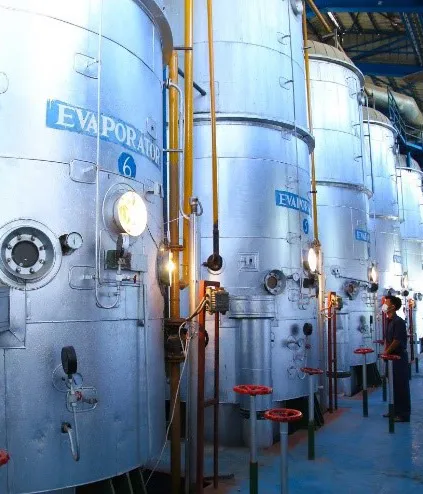
Evaporation
The clarified juice passes through a series of multi-effect evaporators that remove water under controlled vacuum and temperature conditions. This concentrates the juice from approximately 15° Brix to 65° Brix, producing a thick, golden syrup while using minimal energy through heat recovery between stages.
Quality Control
Brix concentration is continuously monitored at each evaporator stage. Vacuum pressure and temperature are precisely controlled to prevent caramelization. Equipment is regularly cleaned to maintain efficiency.
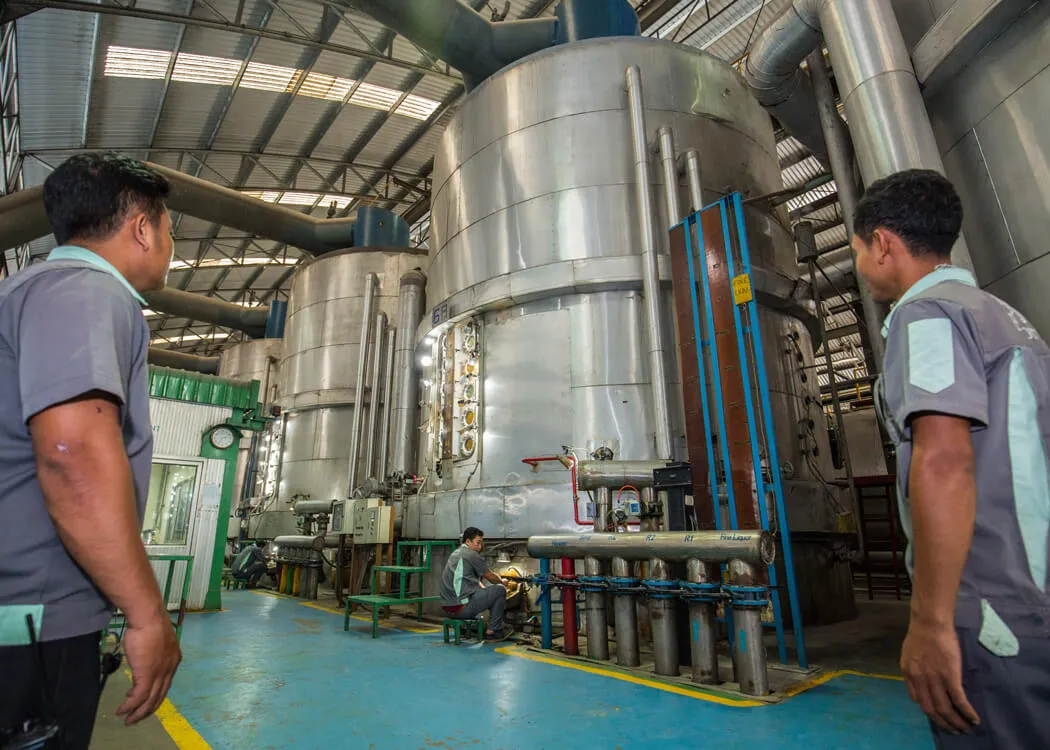
Crystallization
The concentrated syrup enters large vacuum pans where crystallization occurs under carefully controlled conditions. Seed crystals are introduced, and as water is further evaporated, sugar crystals grow to the desired size. This is the critical stage where raw sugar crystals are formed — the skill of our pan operators ensures uniform crystal size and maximum yield.
Quality Control
Crystal size and uniformity are monitored using automated vision systems. Vacuum, temperature, and supersaturation are precisely controlled. Multiple boiling stages (A, B, C massecuites) maximize sugar recovery.
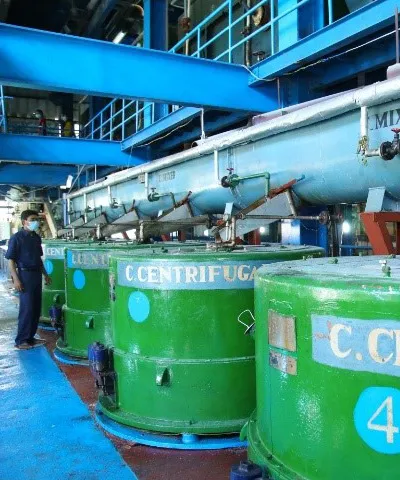
Centrifugation
The sugar crystal and molasses mixture (massecuite) is fed into high-speed centrifuges that spin at over 1,000 RPM. The centrifugal force separates the sugar crystals from the surrounding molasses. The crystals are washed with hot water and steam during spinning to remove remaining molasses, producing clean, golden raw sugar crystals.
Quality Control
Centrifuge speed and washing cycles are optimized for each batch. Crystal color and moisture are tested after each spin cycle. Molasses is collected for further processing or sale as a co-product.
Drying
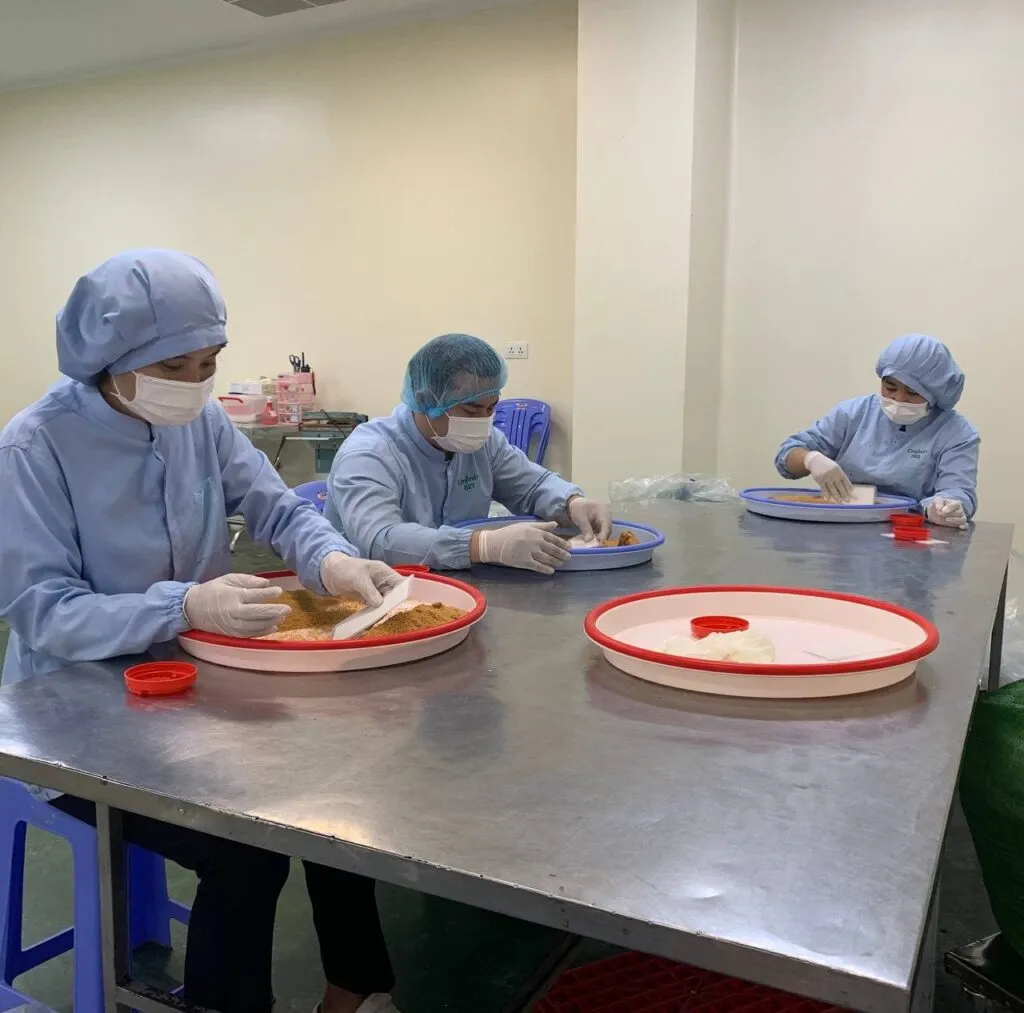
The wet sugar crystals from the centrifuges are transported to rotary drum dryers where hot, filtered air reduces moisture to specification levels. Proper drying is essential for storage stability and to meet international moisture requirements for export sugar. The dried sugar is then cooled before storage or further processing.
Quality Control
Moisture content is continuously measured using inline NIR sensors. Air temperature and flow rates are precisely controlled. Each batch is tested for moisture compliance before release.
Refining (for White Sugar)
For refined white sugar products, raw sugar undergoes additional processing. The crystals are dissolved, and the resulting liquor is treated with activated carbon and ion-exchange resins to remove color, ash, and impurities. The decolorized liquor is then re-crystallized, centrifuged, and dried to produce sparkling white refined sugar meeting ICUMSA 45 standards.
Quality Control
ICUMSA color is tested at multiple refining stages. Activated carbon and resin performance is monitored and regenerated on schedule. Final product meets strict ICUMSA 45 specifications for color, purity, and ash content.
Packaging
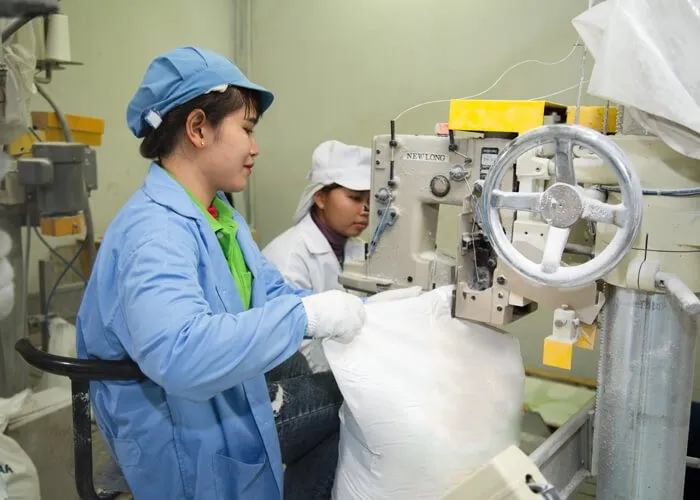
Our automated packaging lines handle everything from 1kg retail bags to 1 MT jumbo bags. High-speed filling machines ensure accurate weights, while heat-sealing and stitching equipment provides secure closure. Metal detectors and X-ray scanners on every line ensure no foreign materials enter the final product. Private label packaging is available with custom branding.
Quality Control
Every bag passes through metal detectors and weight checkers. Packaging integrity is verified through seal-strength testing. Batch codes and traceability information are printed on every unit. Packaging materials are food-grade certified.
Warehousing
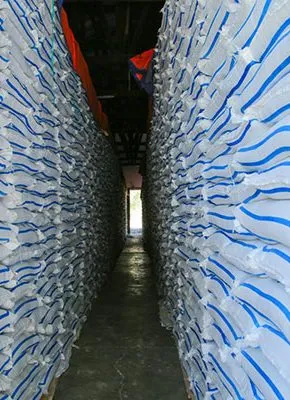
Packaged sugar is stored in our climate-controlled warehouses designed specifically for sugar storage. Temperature and humidity are maintained at optimal levels to preserve product quality. Our warehouse management system ensures full FIFO (First-In-First-Out) rotation and complete lot traceability from farmer to final shipment.
Quality Control
Temperature and humidity are monitored 24/7. Pest control programs are strictly maintained. Stock rotation follows FIFO protocols. Regular quality checks are performed on stored inventory.
Container Loading
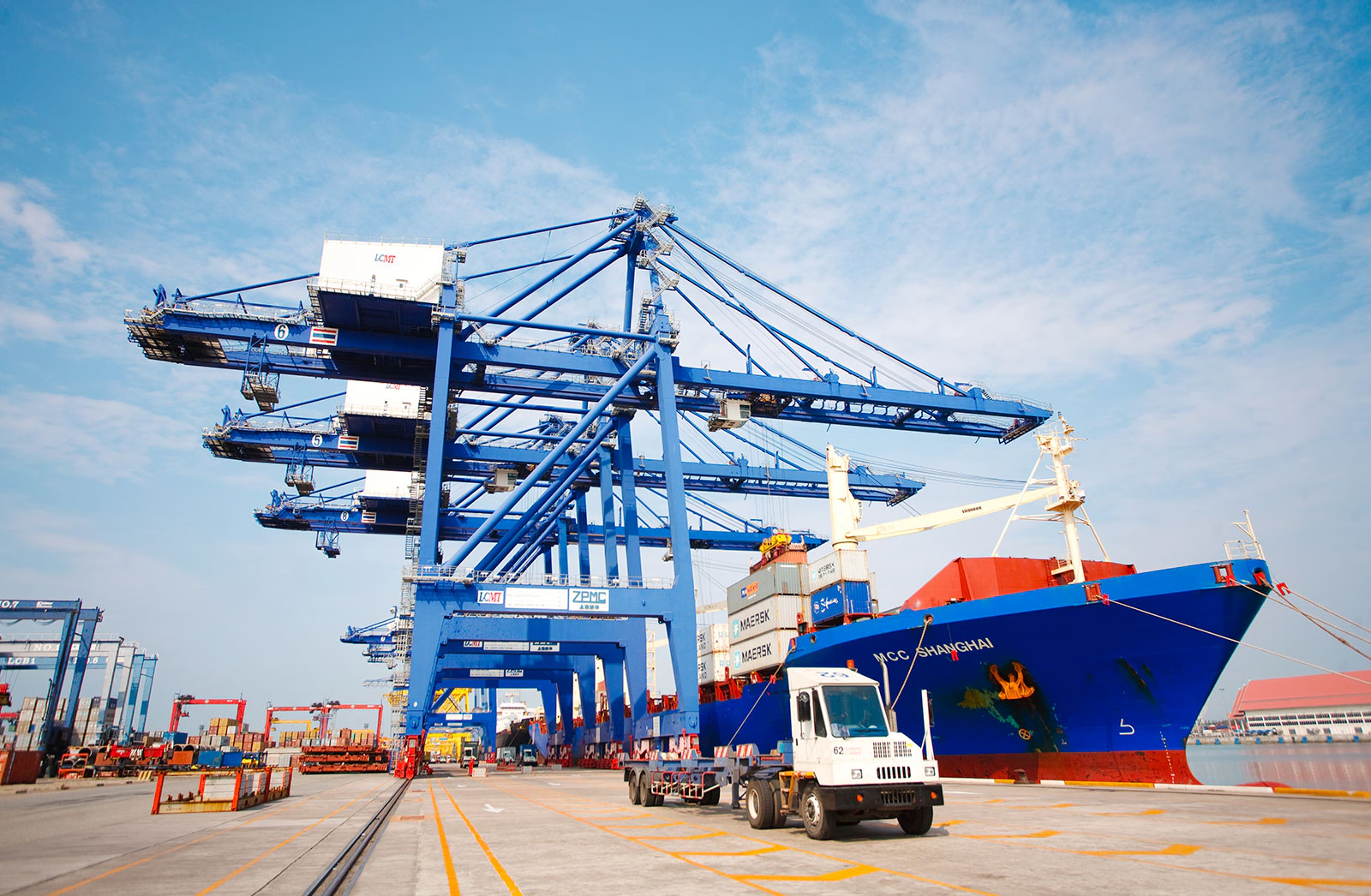
Our experienced logistics team manages container loading at our facility. Containers are inspected for cleanliness and structural integrity before loading. Sugar is loaded using forklifts and conveyor systems, with careful stacking to prevent damage during transit. Container liners are used when required for bulk shipments.
Quality Control
Containers are inspected and photographed before and during loading. Load plans are optimized for weight distribution. Seals are applied and documented. Fumigation certificates are issued where required.
Export from Thai Ports
Our sugar is exported from Thailand's major ports — primarily Laem Chabang and Bangkok Port — with connections to shipping routes worldwide. Our experienced export documentation team handles all paperwork including Bills of Lading, Certificates of Origin, phytosanitary certificates, and SGS inspection reports. We offer flexible shipping terms including FOB, CIF, and CNF.
Quality Control
Pre-shipment SGS inspection is arranged for all export orders. Complete export documentation package is provided. Container tracking is available for all shipments. Insurance coverage is arranged as per buyer requirements.
How ICUMSA Color Measurement Works
ICUMSA (International Commission for Uniform Methods of Sugar Analysis) color is the globally recognized standard for measuring sugar purity and whiteness — the key quality parameter for export sugar pricing.
ICUMSA 45
Sparkling white
Premium refined white sugar — highest purity, for pharmaceuticals, premium food & beverage, and retail. The benchmark export grade.
ICUMSA 150
Bright white
Industrial refined sugar — slightly lower purity, suitable for most food manufacturing. Lower price point than ICUMSA 45.
ICUMSA 600–1200
Golden brown
Raw cane sugar — natural color from retained molasses. Used by refineries for further processing. Commodity trading grade.
The ICUMSA Test Method
ICUMSA color is measured by dissolving sugar in water to a specific concentration, filtering the solution, and measuring light absorbance at 420 nm using a spectrophotometer. The result is expressed in ICUMSA Units (IU) or Reflectance Units (RBU) — lower numbers indicate higher purity and whiteness. Our laboratory performs ICUMSA testing on every production batch using calibrated instruments, with independent verification by SGS or Intertek before each export shipment.
For B2B buyers, the ICUMSA value directly affects pricing: ICUMSA 45 commands a premium of $30–$80/MT over ICUMSA 150. Understanding what drives ICUMSA color — and how our refining process consistently achieves ICUMSA 45 — helps buyers make informed sourcing decisions.
Why Process Transparency Matters for B2B Buyers
When sourcing industrial-scale sugar, knowing the production process is not just an academic exercise — it directly affects your supply chain risk, product quality, and regulatory compliance.
Consistent Quality = Reduced Reformulation Risk
Understanding that we use multi-stage crystallization and ion exchange decolorization — not just bleaching — explains why our ICUMSA 45 is consistent batch to batch. Food manufacturers can rely on our sugar without reformulation risk.
Quality Control at Each Stage
In-process testing at clarification, evaporation, crystallization, and drying means defects are caught before packaging — not after a container arrives at your port. Every batch is tested for ICUMSA color, polarization, moisture, and ash at minimum.
Traceability for Food Safety Audits
Our farm-to-container process documentation supports your own HACCP, BRC, and ISO 22000 food safety audits. Batch codes link back to specific production runs, farm regions, and test results.
Bagasse Energy = Lower Carbon Footprint
Our mills use cane bagasse (pressed cane fiber) to generate steam and electricity for the entire refining process — a closed-loop biomass system. This is increasingly required by European buyers with ESG sourcing commitments.
Quality Control at Each Step
Raw Cane Intake
CCS (Commercial Cane Sugar) testing, Brix refractometer
Juice Clarification
pH monitoring, turbidity testing, lime dosing control
Evaporation
Brix at each effect, temperature and vacuum pressure
Crystallization
Crystal size analysis, massecuite Brix, supersaturation
Centrifugation
Crystal color (ICUMSA), moisture, washing efficiency
Refining (ICUMSA 45)
Activated carbon performance, ion exchange resin capacity
Drying
NIR inline moisture sensors, temperature control
Final Product
Full COA: ICUMSA, Pol, moisture, ash, reducing sugars, SO₂, heavy metals
Pre-shipment
Independent SGS / Intertek inspection, sealed container sample
Frequently Asked Questions — Sugar Production Process
What is the step-by-step sugar refining process used to produce ICUMSA 45?
Our ICUMSA 45 refined white sugar is produced through a 10-step refining process: (1) Raw cane sugar is dissolved in hot water to create a raw liquor. (2) The liquor is treated with phosphoric acid and lime, then aerated to float impurities to the surface (phosphatation). (3) The clarified liquor passes through activated carbon filters to remove color bodies. (4) Ion exchange resins provide final decolorization and ash removal. (5) The purified liquor is concentrated in vacuum evaporators to 65–70° Brix. (6) Fine seed crystals are added in vacuum pans to initiate crystallization. (7) Crystals grow to the desired size under controlled vacuum and temperature. (8) The massecuite (crystal/syrup mixture) is centrifuged to separate crystals from the remaining liquor (runoff). (9) Crystals are washed with hot water and steam during centrifugation to remove residual color. (10) Crystals are dried in rotary drum dryers, cooled, and packaged. The result is ICUMSA 45 refined white sugar with polarization ≥99.80°, moisture ≤0.04%, and ash ≤0.04%.
How does ICUMSA color measurement work and what does ICUMSA 45 mean?
ICUMSA (International Commission for Uniform Methods of Sugar Analysis) color measures sugar purity using light absorbance. The test dissolves sugar in water to a standardized concentration, filters the solution, and measures light absorbance at 420 nm with a spectrophotometer. The result is expressed in ICUMSA Units (IU). A lower ICUMSA number means purer, whiter sugar. ICUMSA 45 means the sugar has a maximum color reading of 45 IU — the industry benchmark for premium refined white sugar. Our laboratory performs this test on every batch, with independent verification by SGS or Intertek before each export shipment.
What quality control tests are performed at each step of sugar production?
Quality control at Kanthararom Sugar runs throughout the entire production process: (1) Raw cane intake — CCS (Commercial Cane Sugar) testing, Brix measurement. (2) Juice clarification — pH monitoring hourly, turbidity testing. (3) Evaporation — Brix at each evaporator effect, vacuum pressure. (4) Crystallization — crystal size analysis using automated vision systems, massecuite Brix. (5) Centrifugation — ICUMSA color of washed crystals, moisture. (6) Drying — inline NIR moisture sensors on every dryer. (7) Final product — full Certificate of Analysis covering ICUMSA color, polarization, moisture, ash, reducing sugars, SO₂, heavy metals (arsenic, lead, cadmium), and microbiological testing. (8) Pre-shipment — independent SGS or Intertek inspection with sealed container sample retained.
Why does process transparency matter when buying bulk sugar B2B?
Process transparency is critical for B2B sugar buyers for three reasons: (1) Quality consistency — knowing we use multi-stage crystallization and ion exchange decolorization (not just bleaching) explains why our ICUMSA 45 is consistent batch to batch, reducing reformulation risk for food manufacturers. (2) Regulatory compliance — our farm-to-container process documentation supports your HACCP, BRC, and ISO 22000 food safety audits, with batch codes linking back to specific production runs and test results. (3) ESG sourcing — our bagasse-based co-generation energy system (a closed-loop biomass process using cane fiber) reduces the carbon footprint of our sugar production, supporting European buyers with ESG procurement requirements.
Learn more about our operations:
Ready to Import Thai Sugar?
Get a competitive FOB or CIF quote within 24 hours. Our export team handles documentation, inspection, and shipping logistics end-to-end.