
Comprender los grados de azúcar ICUMSA
La guía definitiva para compradores sobre las clasificaciones de color ICUMSA — qué miden, cómo se comparan los grados y qué clasificación ICUMSA es la adecuada para su aplicación.
¿Qué es ICUMSA?
ICUMSA stands for the International Commission for Uniform Methods of Sugar Analysis, an organization founded in 1897 that develops and publishes standardized analytical methods for the global sugar industry. Headquartered in the United Kingdom, ICUMSA brings together scientists and technicians from sugar-producing and sugar-consuming countries to establish consistent measurement protocols used worldwide.
When sugar traders and buyers refer to “ICUMSA grade” or “ICUMSA rating,” they are specifically referring to the ICUMSA color measurement — a standardized laboratory test that quantifies the color intensity of a sugar solution. This color rating has become the universal language for classifying sugar quality in international trade. A lower ICUMSA number indicates whiter, more refined sugar, while a higher number indicates a darker, less refined product.
The ICUMSA color rating is not merely an aesthetic measure. It serves as a reliable proxy for overall sugar purity, as the refining processes that remove color-producing impurities (primarily polyphenols, caramel compounds, and melanoidins) also remove other undesirable substances. This is why ICUMSA 45 sugar — the whitest commercially available grade — also exhibits the highest polarization (sucrose purity), lowest ash content, and lowest moisture content of any sugar grade.
For international buyers, the ICUMSA rating provides an objective, reproducible quality benchmark that transcends language barriers and regional quality descriptions. Whether you are purchasing sugar from Thailand, Brazil, India, or Australia, an ICUMSA 45 rating means the same thing — premium refined white sugar meeting the strictest purity standards in the global market.
Método de medición
Cómo funciona la clasificación de color ICUMSA
The ICUMSA color rating is determined through a spectrophotometric analysis procedure standardized as ICUMSA Method GS2/3-10. The test measures the absorbance of a sugar solution at a wavelength of 420 nanometers (nm), which falls in the visible blue-violet range of the light spectrum. Color compounds in sugar absorb light at this wavelength, so higher concentrations of color-producing impurities result in greater light absorption and a higher ICUMSA number.
The laboratory procedure involves dissolving a precisely weighed sample of sugar in distilled water to create a solution of known concentration, typically 50% (w/w) for white sugar. The solution is filtered through a 0.45-micron membrane filter to remove any suspended particles that could interfere with the optical measurement. The filtered solution is then placed in a spectrophotometer cell, and the absorbance at 420nm is measured against a distilled water reference.
The ICUMSA color value is calculated using the formula: ICUMSA Color (IU) = Absorbance x 1000 / (cell path length in cm x concentration in g/mL). The result is expressed in ICUMSA Units (IU), also called RBU (Reference Base Units). This standardized calculation ensures that results from different laboratories worldwide are directly comparable, regardless of the specific spectrophotometer model or cell dimensions used.
At our facility, we perform ICUMSA color testing on every production batch using calibrated UV-Vis spectrophotometers traceable to international reference standards. Refined white sugar is tested every 30 minutes during production to ensure continuous compliance with the ICUMSA 45 specification. Every shipment is accompanied by a Certificate of Analysis (COA) reporting the actual ICUMSA color value measured on representative samples drawn according to ICUMSA sampling procedures.
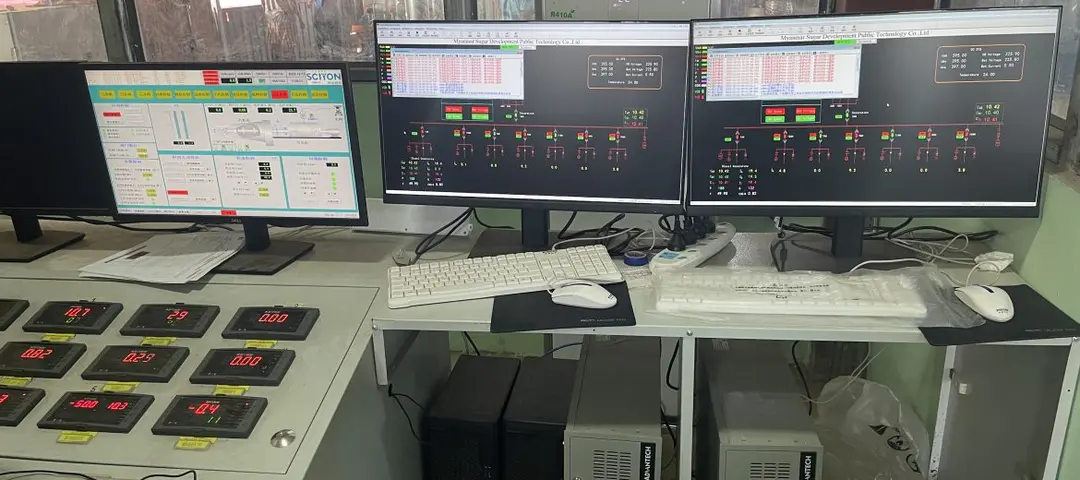
Análisis espectrofotométrico
Calibrated UV-Vis spectrophotometer measuring sugar solution absorbance at 420nm wavelength for precise ICUMSA color determination.
Monitoreo continuo de calidad
Every batch is tested throughout production to verify ICUMSA compliance before packaging. Non-conforming product is recycled for re-refining.
Comparación de grados
Grados de azúcar ICUMSA: comparación completa
Especificaciones y aplicaciones detalladas para cada grado principal de azúcar ICUMSA comercializado en el mercado internacional.
ICUMSA 45
Blanco refinado premiumNuestra especialidadICUMSA 45 is the highest quality refined white sugar available on the international market. It represents the gold standard for sugar purity, with its brilliant white appearance, exceptional clarity in solution, and near-perfect sucrose content. This grade undergoes the most intensive refining process, including multiple stages of carbonation, filtration, ion-exchange decolorization, and precision crystallization to achieve its ultra-low color value.
Especificaciones técnicas
- ICUMSA Color: Max 45 RBU
- Polarization: Min 99.80°Z
- Moisture: Max 0.04%
- Ash Content: Max 0.04%
- Reducing Sugars: Max 0.04%
- SO2: Max 20 mg/kg
- Grain Size: 0.4 - 0.7 mm
- Appearance: Sparkling white crystals
Aplicaciones comunes
- Premium food and beverage manufacturing
- Pharmaceutical formulations
- Confectionery and chocolate production
- Retail table sugar (consumer market)
- Specialty drink and cocktail applications
- High-end bakery products
- Baby food and infant formula
- Applications requiring white color clarity
Mercados clave
- Middle East (UAE, Saudi Arabia, Iraq)
- East Asia (China, South Korea, Japan)
- Southeast Asia (Indonesia, Vietnam)
- North Africa (Egypt, Algeria, Morocco)
- West Africa (Nigeria, Ghana, Senegal)
- European Union re-export markets
- South Asian retail markets
- Premium foodservice global chains
ICUMSA 100
Refinado estándarICUMSA 100 sugar is a standard refined white sugar that offers excellent quality at a more competitive price point than ICUMSA 45. While slightly less refined than the premium grade, ICUMSA 100 still presents a clean white appearance suitable for the vast majority of food processing and retail applications. The refining process is similar to ICUMSA 45 but with fewer decolorization passes, resulting in minor residual color that is virtually imperceptible to the consumer eye.
Especificaciones técnicas
- ICUMSA Color: Max 100 RBU
- Polarization: Min 99.70°Z
- Moisture: Max 0.06%
- Ash Content: Max 0.06%
- Reducing Sugars: Max 0.06%
- Grain Size: 0.4 - 0.8 mm
Aplicaciones comunes
- General food processing and manufacturing
- Beverage production (soft drinks, juices)
- Baking and confectionery (non-premium segment)
- Retail sugar for cost-sensitive markets
- Dairy products and ice cream
- Canned and preserved foods
ICUMSA 150
Ligeramente menos refinadoICUMSA 150 sugar occupies the middle ground between fully refined white sugar and raw sugar. This grade has undergone substantial refining but retains a very slight golden tint that distinguishes it from ICUMSA 45 or ICUMSA 100 grades. It is widely used in food processing applications where the slight color does not affect the final product's appearance, making it an excellent value option for cost-conscious industrial buyers. Many large-scale food manufacturers prefer ICUMSA 150 because the quality is more than adequate for their applications while the price is noticeably lower than premium refined grades.
Especificaciones técnicas
- ICUMSA Color: Max 150 RBU
- Polarization: Min 99.50°Z
- Moisture: Max 0.08%
- Ash Content: Max 0.10%
- Reducing Sugars: Max 0.10%
- Grain Size: 0.5 - 1.0 mm
Aplicaciones comunes
- Industrial food processing
- Beverage manufacturing
- Bakery and cookie production
- Sauce and condiment manufacturing
- Cost-effective retail markets
- Animal feed supplements
Mercados clave
- Sub-Saharan Africa
- South and Southeast Asia
- Central America and Caribbean
- Industrial buyers worldwide
- Cost-sensitive retail markets
- Private label economy brands
ICUMSA 600 - 1200
Azúcar crudo (VHP / Marrón)Raw sugar in the ICUMSA 600-1200 range is the product of initial milling and crystallization without full refining. VHP (Very High Polarization) raw sugar, typically rated ICUMSA 600-800, is the most traded sugar commodity globally, primarily used as feedstock for refineries in importing countries. This grade retains a golden-brown color from natural molasses content and has a characteristic sweet aroma. Higher ICUMSA values (800-1200) indicate standard raw sugar with more molasses retention, which is used for both refining and direct consumption in markets that prefer unrefined sugar products.
Especificaciones técnicas
- ICUMSA Color: 600 - 1200 RBU
- Polarization: Min 99.20°Z (VHP) / 97.50°Z (standard)
- Moisture: Max 0.25% (VHP) / 0.50% (standard)
- Ash Content: Max 0.15%
- Grain Size: 0.9 - 1.2 mm
- Appearance: Golden to dark brown crystals
Aplicaciones comunes
- Refinery feedstock (re-refining to white sugar)
- Brown sugar production
- Ethanol and biofuel production
- Direct consumption in developing markets
- Specialty and artisanal food products
- Fermentation industries (brewing, distilling)
Guía de decisión del comprador
¿Qué grado ICUMSA es el adecuado para su negocio?
El grado ICUMSA ideal depende de su industria, requisitos del producto final, expectativas del mercado y presupuesto. Use esta matriz de decisión.
| Industria / Aplicación | ICUMSA 45 | ICUMSA 100 | ICUMSA 150 | ICUMSA 600+ |
|---|---|---|---|---|
| Premium Retail (Table Sugar) | Ideal | Bueno | — | — |
| Confectionery & Chocolate | Ideal | Bueno | Aceptable | — |
| Soft Drink Manufacturing | Ideal | Ideal | Bueno | — |
| Bakery & Pastry | Bueno | Ideal | Bueno | — |
| Pharmaceutical | Ideal | — | — | — |
| Dairy & Ice Cream | Bueno | Ideal | Bueno | — |
| Sauce & Condiment Production | Bueno | Bueno | Ideal | — |
| Refinery Feedstock | — | — | — | Ideal |
| Ethanol / Fermentation | — | — | Bueno | Ideal |
| Cost-Sensitive Retail Markets | — | Bueno | Ideal | — |
Comparación de orígenes
ICUMSA 45 tailandés vs brasileño: diferencias clave
Brazil and Thailand are the world's two largest sugar exporters, and both produce ICUMSA 45 refined white sugar. However, there are meaningful differences between Thai and Brazilian ICUMSA 45 that buyers should understand when making sourcing decisions.
Sugarcane varieties and soil conditions influence the base quality of the raw sugar before refining. Thai sugarcane, predominantly LK92-11 and K95-84 varieties grown in the fertile Korat Plateau, produces juice with high sucrose content and relatively low levels of color precursors. This gives Thai refineries an advantage in achieving very low ICUMSA values without excessive chemical treatment, resulting in a cleaner flavor profile.
Refining technology also differs between the two origins. Thai refineries have invested heavily in modern ion-exchange decolorization and membrane filtration technology over the past decade. Many Brazilian mills still rely primarily on carbonation and sulfitation processes, which are effective but can leave trace sulfur dioxide residues. Thai ICUMSA 45 typically has lower SO2 levels (under 20 mg/kg versus 70 mg/kg for some Brazilian sources), which is important for pharmaceutical and baby food applications.
Shipping logistics represent another differentiator. For buyers in Asia, the Middle East, and East Africa, Thailand offers significantly shorter transit times and lower freight costs compared to Brazil. A container from Laem Chabang to Jebel Ali takes approximately 14-18 days, versus 25-35 days from Santos. This translates to lower inventory carrying costs and faster supply chain response times.
Pricing dynamicsbetween Thai and Brazilian sugar are influenced by different crop cycles and currency movements. Brazil's harvest season (April to November) is offset from Thailand's (November to April), creating opportunities for buyers to optimize procurement timing. Thai sugar is priced in USD and is typically competitive with Brazilian sugar on a CIF basis to Asian, Middle Eastern, and African destinations.
| Factor | ICUMSA 45 tailandés | ICUMSA 45 brasileño |
|---|---|---|
| Typical ICUMSA Range | 20 - 45 RBU | 30 - 45 RBU |
| SO2 Content | Under 20 mg/kg | 20 - 70 mg/kg |
| Harvest Season | November - April | April - November |
| Primary Decolorization | Ion-exchange resin | Carbonation / Sulfitation |
| Transit to Middle East | 14 - 18 days | 25 - 35 days |
| Transit to East Asia | 7 - 12 days | 30 - 40 days |
Aseguramiento de calidad
Cómo probamos y certificamos las clasificaciones ICUMSA
At Kanthararom Sugar, ICUMSA compliance is not a final-stage check — it is woven into every step of our refining process. Our in-house laboratory operates 24/7 during production season with qualified food science technicians conducting continuous monitoring at every critical control point.
During refining, inline color sensors provide real-time ICUMSA approximations, allowing operators to make immediate process adjustments. Formal laboratory testing using calibrated spectrophotometers is performed every 30 minutes on production-line samples. Any batch exceeding the target ICUMSA value is automatically diverted for additional decolorization treatment or reclassified to an appropriate lower grade.
Before shipment, composite samples representing the entire lot are submitted for comprehensive analysis covering ICUMSA color, polarization, moisture, ash, reducing sugars, SO2, heavy metals, pesticide residues, and microbiological parameters. Results are documented in a detailed Certificate of Analysis (COA) that accompanies every shipment.
For buyers requiring independent verification, we welcome third-party inspection by SGS, Bureau Veritas, Intertek, or any internationally recognized inspection agency. Our facilities maintain full ISO 17025 traceability for all laboratory instruments, and we participate in annual ICUMSA proficiency testing programs to validate our analytical accuracy.
¿Listo para comenzar a importar?
Nuestro equipo de exportación le ayuda a pasar de la investigación al primer embarque. Cotización, orientación documental y soporte logístico.