الدليل الكامل لاستيراد السكر من تايلاند
كل ما تحتاج معرفته عن توريد وشحن وتخليص السكر التايلاندي — من درجات ICUMSA والإنكوترمز إلى الوثائق والإجراءات الجمركية.
لماذا تستورد السكر من تايلاند؟
Thailand is the world's second-largest sugar exporter after Brazil, shipping over 10 million metric tons of raw and refined sugar annually to more than 120 countries. For international buyers seeking a reliable, high-quality sugar supply at competitive prices, Thailand represents one of the most attractive sourcing origins in the global commodity market.
Several factors make Thai sugar particularly compelling for importers. Thailand's tropical climate and fertile alluvial plains produce sugarcane with exceptionally high sucrose content, typically ranging from 12% to 14% CCS (Commercial Cane Sugar). The country's well-developed sugar milling infrastructure includes over 50 modern mills equipped with advanced refining technology capable of producing premium ICUMSA 45 refined white sugar that meets the strictest international quality standards.
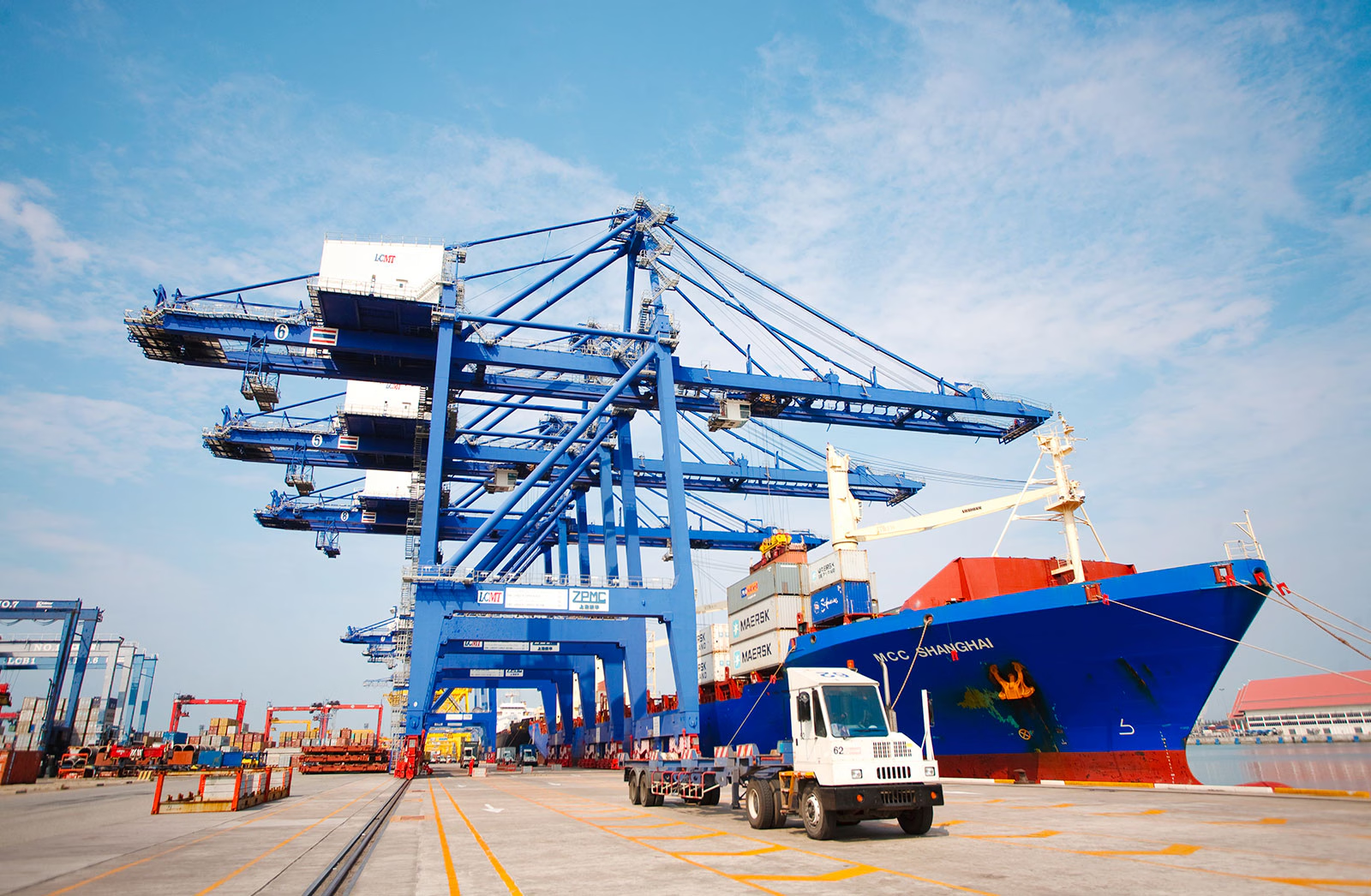
Geographically, Thailand's strategic position in Southeast Asia provides efficient shipping access to major sugar-importing regions including East Asia, South Asia, the Middle East, and East Africa. Major export ports such as Laem Chabang and Bangkok Port offer regular container and bulk vessel services to virtually every major destination worldwide, with competitive freight rates and reliable schedules.
Furthermore, Thai sugar exporters benefit from a well-established regulatory framework overseen by the Office of the Cane and Sugar Board (OCSB), which ensures quality standards, fair pricing for farmers, and transparent export procedures. This regulatory stability gives international buyers confidence in the consistency and reliability of Thai sugar supplies across multiple production seasons.
This guide walks you through every step of the import process — from identifying your sugar requirements and finding a trustworthy supplier, to negotiating terms, managing documentation, and clearing customs at your destination port. Whether you are a first-time importer or an experienced commodity trader expanding into Thai sugar, this resource provides the practical knowledge you need for a successful transaction.
العملية خطوة بخطوة
كيفية استيراد السكر من تايلاند: 8 خطوات أساسية
اتبع هذه العملية المجربة التي يستخدمها آلاف مستوردي السكر الناجحين في جميع أنحاء العالم لتوريد السكر التايلاندي الممتاز بكفاءة وبمخاطر منخفضة.
حدد متطلباتك من السكر
Before approaching any supplier, clearly define your technical and commercial requirements. This preparation will streamline negotiations, ensure accurate quotations, and prevent costly misunderstandings later in the process.
درجة ICUMSA
ICUMSA 45 for premium refined white, ICUMSA 100 for standard refined, ICUMSA 150 for slightly less refined, or ICUMSA 600-1200 for raw sugar. Each grade has specific applications and pricing tiers. ICUMSA 45 commands the highest premium due to its superior whiteness and purity.
الكمية
Our minimum order quantity is 1 × 20ft container (~25 MT) for containerized shipments, scaling up to 12,500 MT or more for bulk vessel charter. Volume significantly impacts unit pricing, so buyers should consider consolidating demand across multiple deliveries.
التعبئة
Options include 50kg polypropylene bags (most common for developing markets), 1 MT jumbo bags (FIBC) for industrial buyers, 25kg bags for retail distribution, or bulk shipment in lined containers. Custom private-label packaging is available from most Thai exporters.
ابحث عن مورد تايلاندي موثوق
Supplier selection is arguably the most critical step in the import process. A reliable supplier ensures consistent quality, on-time delivery, and proper documentation — the three pillars of a successful sugar import operation. Thailand has dozens of licensed sugar exporters, but quality and reliability vary significantly.
الشهادات الرئيسية للتحقق منها:
- ✓ISO 9001:2015 — Quality Management System certification ensures systematic processes and consistent output across all production batches.
- ✓FSSC 22000 — Food Safety System Certification demonstrates world-class food safety management, a requirement for many European and North American buyers.
- ✓HACCP — Hazard Analysis Critical Control Point compliance ensures systematic identification and control of food safety hazards throughout production.
- ✓GMP (Good Manufacturing Practice) — Confirms that the factory maintains hygienic production conditions meeting international food safety standards.
- ✓OCSB Export License — Issued by Thailand's Office of the Cane and Sugar Board, this is the mandatory license for all Thai sugar exporters.
Beyond certifications, assess the supplier's production capacity, export track record, financial stability, and willingness to accommodate third-party inspections. Request references from existing buyers in your market and, if possible, visit the factory to inspect operations firsthand.
اطلب عرض سعر وتفاوض على الشروط
Submit a detailed Request for Quotation (RFQ) to your shortlisted suppliers specifying the exact ICUMSA grade, quantity, packaging, delivery port, and preferred Incoterms. A well-structured RFQ demonstrates professionalism and enables suppliers to provide accurate, comparable quotes.
Understanding Incoterms is essential for sugar trade negotiations. The three most common terms in international sugar trading are FOB (Free on Board), CIF (Cost, Insurance, and Freight), and CNF (Cost and Freight). Each term defines a different allocation of costs, risks, and responsibilities between buyer and seller. First-time importers typically prefer CIF terms because the supplier handles shipping and insurance arrangements, simplifying the logistics process. Experienced importers often prefer FOB to maintain control over freight and insurance costs.
When comparing quotes, look beyond unit price. Consider the supplier's payment terms, delivery reliability, willingness to accommodate inspection requirements, and quality guarantee provisions. A slightly higher price from a reliable, certified supplier often delivers better value than the cheapest quote from an unproven source.
اتفق على شروط الدفع
Payment terms in international sugar trade balance the buyer's need for security against the seller's need for payment assurance. The most common payment methods include Letter of Credit (L/C), Telegraphic Transfer (T/T), and Documents against Payment (D/P). Your choice depends on the relationship maturity, transaction size, and risk appetite of both parties.
For first-time transactions with a new supplier, an irrevocable Letter of Credit from a reputable international bank is the industry standard. The L/C protects both parties: the buyer knows payment will only be released when the supplier presents compliant shipping documents, while the seller has a bank guarantee of payment upon document presentation. As the trading relationship develops and trust builds, parties may transition to more flexible terms such as T/T with a deposit-and-balance structure.
Always ensure payment terms are clearly documented in the sales contract, including the payment currency (typically USD), bank details, document presentation requirements, and any applicable late-payment provisions. Engaging a trade finance specialist at your bank can help structure terms that protect your interests while remaining acceptable to the supplier.
قدم الطلب وأكد جدول الإنتاج
Once commercial terms are agreed, formalize the transaction with a signed sales contract or Purchase Order. This document should comprehensively detail all agreed specifications including sugar grade and ICUMSA limit, quantity with tolerance (typically +/- 5%), packaging specifications, unit price and Incoterms, payment terms, delivery schedule, quality guarantees, and dispute resolution mechanisms.
Confirm the production schedule with your supplier, especially during peak season (December through April) when Thai mills are operating at maximum capacity. Production lead times typically range from 2 to 4 weeks for standard grades, though ICUMSA 45 refined sugar may require longer lead times due to the additional refining steps involved. Plan your orders well in advance to secure preferred shipping dates and avoid delays that could impact your downstream supply chain.
نظم فحص ما قبل الشحن
Pre-shipment inspection (PSI) is a critical quality assurance step that protects the buyer's interests before goods leave the origin country. For sugar shipments, the inspection typically covers quality verification (ICUMSA color, polarization, moisture, ash content), quantity verification (weighing), packaging integrity, and container condition.
The most widely recognized inspection agencies for sugar trade include SGS, Bureau Veritas, Intertek, and CCIC. These agencies maintain laboratories in Thailand equipped to perform comprehensive sugar analysis according to ICUMSA methods. The inspector will draw representative samples, conduct laboratory testing, and issue a Certificate of Analysis (COA) and Certificate of Weight confirming the shipment meets contracted specifications.
Inspection costs are typically borne by the buyer but can be negotiated as part of the commercial terms. The cost ranges from $800 to $2,500 depending on the shipment size and scope of analysis required. This is a small investment relative to the value of a sugar shipment and provides essential documentation for customs clearance and quality dispute resolution.
أكمل الشحن والتوثيق
Proper documentation is the backbone of international sugar trade. Missing or incorrect documents can delay customs clearance, incur demurrage charges, and even result in shipment rejection at the destination port. Thai sugar exporters are required to prepare a comprehensive set of export documents that satisfy both Thai export regulations and the importing country's requirements.
The shipping process for containerized sugar typically takes 2 to 6 weeks depending on the destination. Containers are loaded at the supplier's warehouse or the port's Container Freight Station, then transported to the departure port — usually Laem Chabang Port or Bangkok Port. Your supplier or freight forwarder will coordinate vessel booking, container pickup, loading, and document preparation.
Ensure all documents are prepared accurately and submitted promptly. For L/C transactions, documents must strictly comply with the credit terms — even minor discrepancies can cause payment delays. Request draft copies of all documents for review before final issuance to catch and correct any errors early.
خلص الجمارك في وجهتك
The final step is customs clearance at your destination port. Work with an experienced customs broker who specializes in food commodity imports. They will handle the declaration process, duty calculation, and coordination with port authorities to release your cargo. Customs requirements vary significantly by country, so local expertise is invaluable.
Common requirements at destination customs include the original Bill of Lading (for cargo release), Commercial Invoice, Packing List, Certificate of Origin (for preferential tariff rates under trade agreements), Phytosanitary Certificate (plant health verification), Health Certificate, and the third-party inspection report. Some countries also require import permits, fumigation certificates, or specific labeling compliance.
Import duties on sugar vary widely by country and can be a significant cost factor. Many countries protect domestic sugar industries with high tariffs, while others offer preferential rates for imports from ASEAN member states under free trade agreements. Research your country's tariff schedule and explore whether any trade agreements with Thailand could reduce your duty obligation.
التوثيق
الوثائق المطلوبة لاستيراد السكر التايلاندي
كل تصدير للسكر من تايلاند يتطلب مجموعة محددة من الوثائق. أدناه قائمة التحقق الكاملة مع الأوصاف وتحديد الطرف المسؤول.
| الوثيقة | جهة الإصدار | الغرض |
|---|---|---|
| Commercial Invoice | Exporter (Seller) | States the value of goods, terms of sale, and payment details. Used for customs valuation. |
| Packing List | Exporter (Seller) | Details the packaging, weight, and quantity of goods per container or shipment unit. |
| Bill of Lading (B/L) | Shipping Line / Carrier | Contract of carriage, receipt of goods, and document of title. Required for cargo release at destination. |
| Certificate of Origin (CO) | Thai Chamber of Commerce or Ministry of Commerce | Certifies goods were produced in Thailand. Required for preferential tariff rates under FTAs. |
| Phytosanitary Certificate | Department of Agriculture, Thailand | Certifies the product is free from plant pests and diseases. Required by most importing countries. |
| Health Certificate | Thai FDA or Ministry of Public Health | Confirms the sugar is safe for human consumption and meets food safety standards. |
| Certificate of Analysis (COA) | Exporter Lab or Third-Party (SGS, etc.) | Laboratory report confirming ICUMSA, polarization, moisture, ash, and other quality parameters. |
| Certificate of Weight | Third-Party Inspector | Independent verification of shipment weight at loading. Used to reconcile delivered quantity. |
| Insurance Certificate | Insurance Company | Marine cargo insurance covering the shipment. Required under CIF terms; optional under FOB/CNF. |
| Fumigation Certificate | Certified Fumigation Company | Confirms containers were fumigated against pests. Required by some importing countries (e.g., Australia, NZ). |
شروط التجارة
شرح الإنكوترمز: FOB مقابل CIF مقابل CNF
تحدد الإنكوترمز من يدفع ماذا في الشحن الدولي. اختيار الإنكوترم المناسب يؤثر على التكلفة الإجمالية وتعرض المخاطر والتحكم اللوجستي.
FOB
Free on Board
The seller delivers the sugar on board the vessel at the Thai port. From that point, all costs and risks transfer to the buyer. The buyer arranges and pays for ocean freight and marine insurance.
المزايا
- + Full control over freight and insurance costs
- + Ability to negotiate shipping rates directly
- + Choose your preferred carrier and route
- + Often lower total cost for experienced importers
اعتبارات
- - Buyer assumes risk once goods are on board
- - Must arrange shipping logistics
- - Requires freight forwarding expertise
CIF
Cost, Insurance & Freight
The seller pays for ocean freight and marine insurance to the destination port. The buyer takes delivery at the destination port and handles customs clearance and inland transport.
المزايا
- + Simplified logistics for the buyer
- + One price covers goods, freight, and insurance
- + Ideal for first-time importers
- + Easier to compare supplier quotes
اعتبارات
- - Less control over shipping arrangements
- - Seller's insurance may be minimum coverage
- - Freight costs may be marked up by seller
CNF / CFR
Cost & Freight
Similar to CIF, but the seller pays only for ocean freight — not insurance. The buyer must arrange their own marine cargo insurance to cover the transit risk from port to port.
المزايا
- + Seller handles freight booking
- + Buyer controls insurance coverage and provider
- + Often slightly lower quoted price than CIF
- + Good middle ground between FOB and CIF
اعتبارات
- - Must arrange own marine insurance
- - Risk during transit falls on buyer
- - Insurance must be in place before shipment
طرق الدفع
مقارنة شروط الدفع لاستيراد السكر
اختيار طريقة الدفع الصحيحة يوازن الأمان بين المشتري والبائع. إليك مقارنة تفصيلية لشروط الدفع الأكثر شيوعًا في تجارة السكر الدولية.
| طريقة الدفع | كيف تعمل | أمان المشتري | الأفضل لـ |
|---|---|---|---|
| Letter of Credit (L/C) | Bank guarantees payment upon presentation of compliant shipping documents | عالية | First-time orders, large shipments, new supplier relationships |
| T/T (30% deposit + 70% against B/L) | Wire transfer — deposit to start production, balance upon document presentation | متوسطة | Established relationships, smaller shipments |
| Documents against Payment (D/P) | Buyer pays through their bank when shipping documents are presented | متوسطة | Repeat buyers with established credit history |
| Open Account (Net 30/60/90) | Buyer pays after receiving goods within agreed period | عالية جدًا | Long-term partnerships with strong trust and credit history |
الخدمات اللوجستية
الجدول الزمني للشحن من تايلاند حسب المنطقة
أوقات العبور من ميناء لايم تشابانغ، الميناء الرئيسي للتصدير في تايلاند، إلى المناطق المستوردة الرئيسية. قد تختلف الأوقات الفعلية.
Southeast Asia
3-7 days
Singapore, Jakarta, Manila, Ho Chi Minh
East Asia
7-12 days
Shanghai, Busan, Tokyo, Kaohsiung
South Asia
7-14 days
Chennai, Colombo, Chittagong, Karachi
Middle East
14-21 days
Jebel Ali, Dammam, Jeddah, Muscat
East Africa
18-25 days
Mombasa, Dar es Salaam, Djibouti
West Africa
28-35 days
Lagos, Tema, Abidjan, Dakar
North Africa
25-32 days
Alexandria, Casablanca, Algiers
Europe
25-35 days
Rotterdam, Hamburg, Felixstowe
Americas
30-45 days
New York, Santos, Buenaventura
جاهز للبدء في الاستيراد؟
يساعدك فريق التصدير لدينا في الانتقال من البحث إلى أول شحنة. عرض سعر وإرشاد وثائقي ودعم لوجستي.